
Every now and then, usually after good rain, mushrooms begin to appear here at Little Rock Garden and Arboretum.
A small cluster might push up near an old stump. Sometimes Turkey Tail spreads across a fallen branch, or a bright orange burst of Chicken of the Woods appears from the side of a log.
They arrive quietly, almost overnight, and just as quietly disappear again.
But what we see above the ground is only a small part of a much larger living system beneath our feet. In regenerative farming, that hidden world plays a very important role.
The Living Network Beneath the Soil
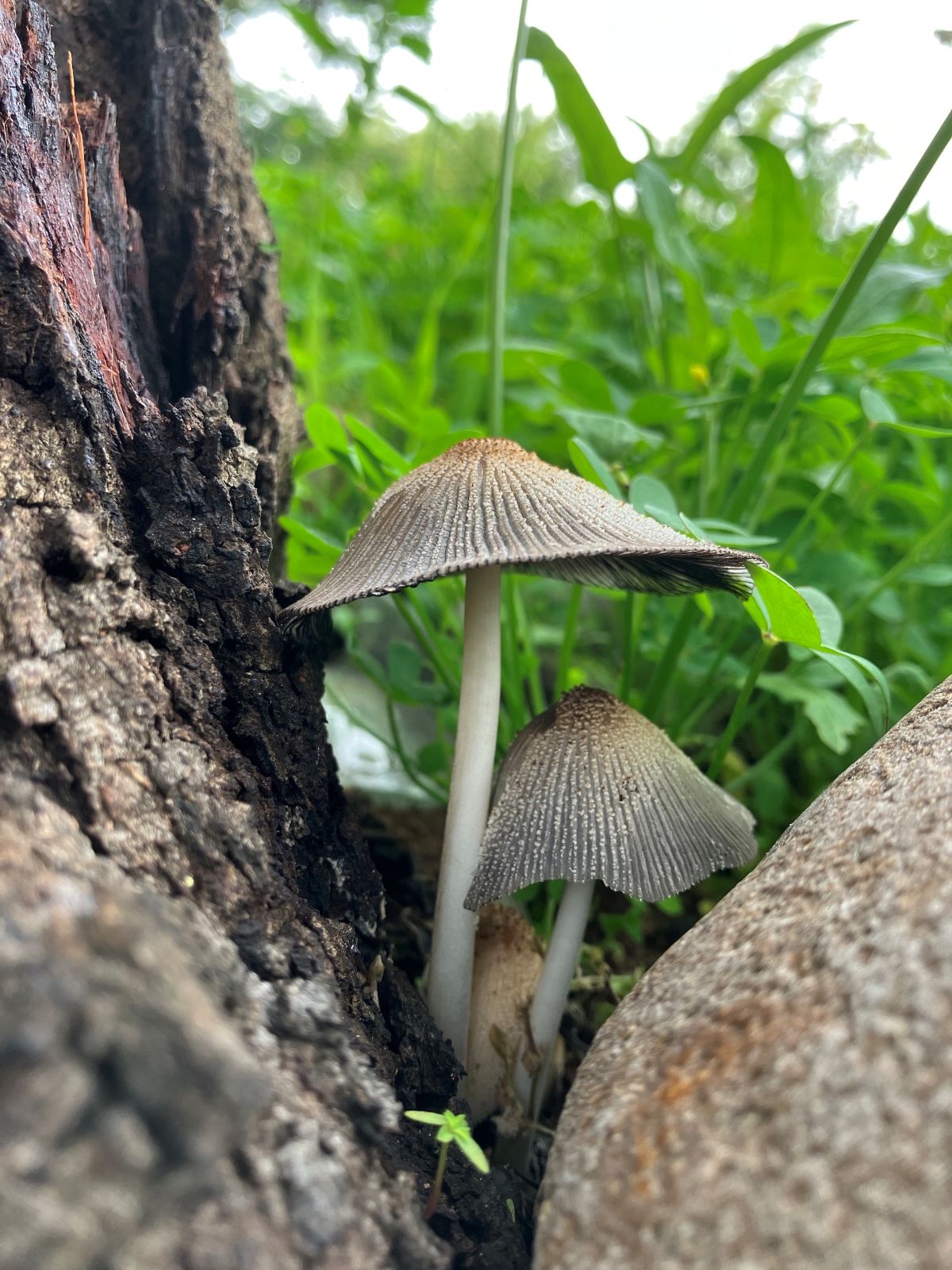
Most of the life of fungi exists underground.
The mushroom itself is simply the fruiting body of a much larger organism called mycelium – a network of fine threads that spreads through soil, wood, plant roots and organic matter. This network breaks down organic material and helps move nutrients back into the soil so plants can use them again.
Healthy soil is not just dirt. It is a living ecosystem, and fungi are some of the quiet engineers that help hold that system together.
Nature’s Recyclers at Work
Fungi are also nature’s recyclers. When branches fall, plants die, or trees are cut, fungi slowly break this material down. Over time wood, leaves and plant fibres are transformed into organic matter that feeds the soil again.
On a regenerative farm we try to work with this process rather than against it. At Little Rock we sometimes place logs and tree stumps intentionally in certain areas rather than removing them. These pieces of wood become home to fungi and, as they slowly break down, they begin to hold moisture like a sponge while feeding the surrounding soil.
This is particularly important here in the Breede Valley where the soils are naturally sandy and dry. Building healthy soil in these conditions is a slow process.
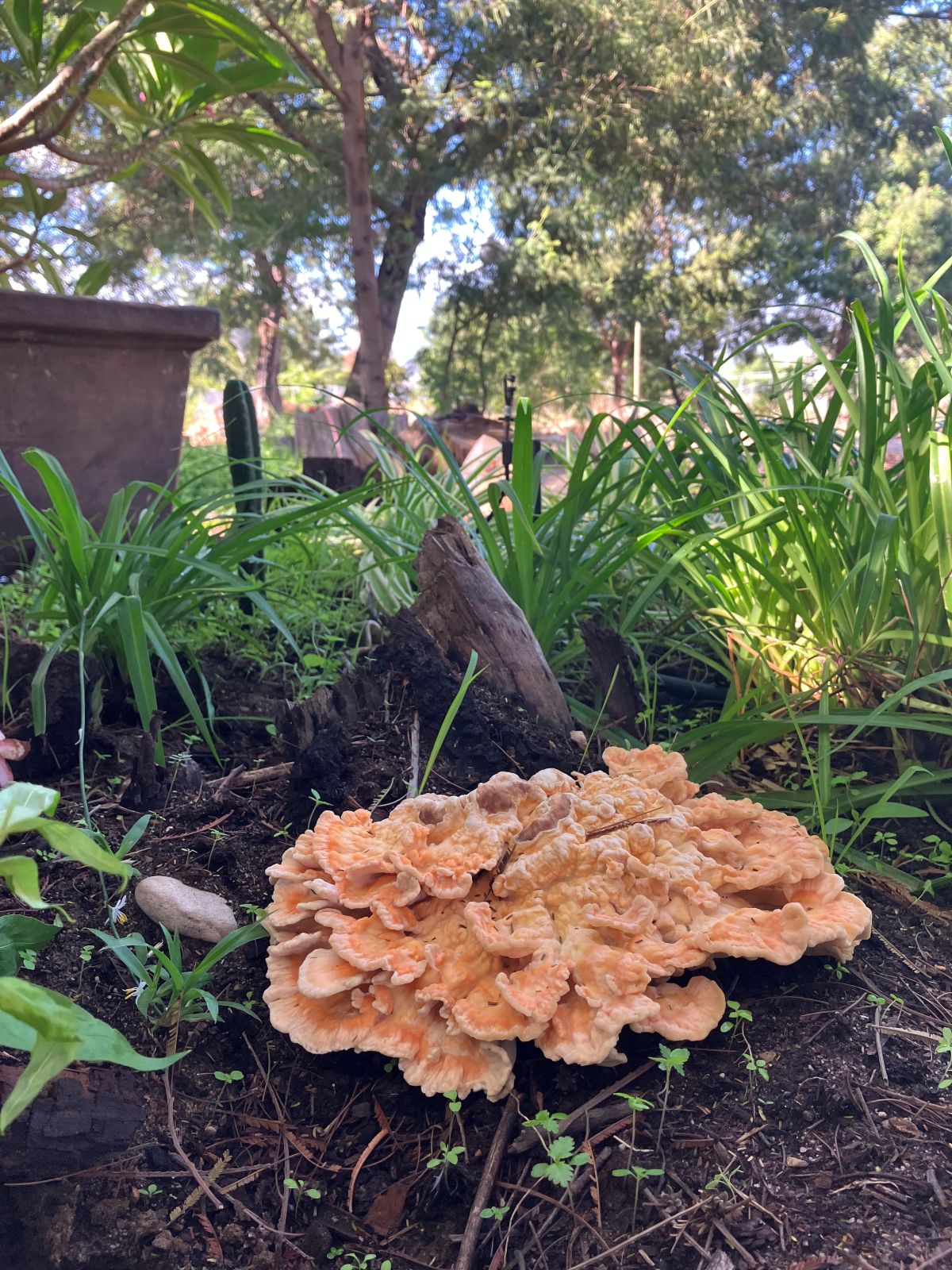
Over time we add compost, mulch, manure and wood material back onto the land, and fungi help transform it into richer soil.
Small Signs of Regeneration
During winter we start noticing encouraging signs. In some of the more closely grown areas – around Steve and Burner’s Rose Garden, Percy’s Garden and the boma area – small pockets of the landscape are beginning to feel almost fairy forest-like.
Moisture lingers longer after rain, mist drifts through the trees in the early mornings, and mushrooms appear regularly through much of the winter season.
These small signs remind us that the soil life is slowly increasing and that the land is gradually regenerating.
Working With Nature
Mushrooms spread naturally through spores, but also through the underground mycelium network itself. On a regenerative farm we can encourage this simply by creating the right conditions – leaving wood on the land, creating moist shaded areas, and allowing natural processes to unfold.
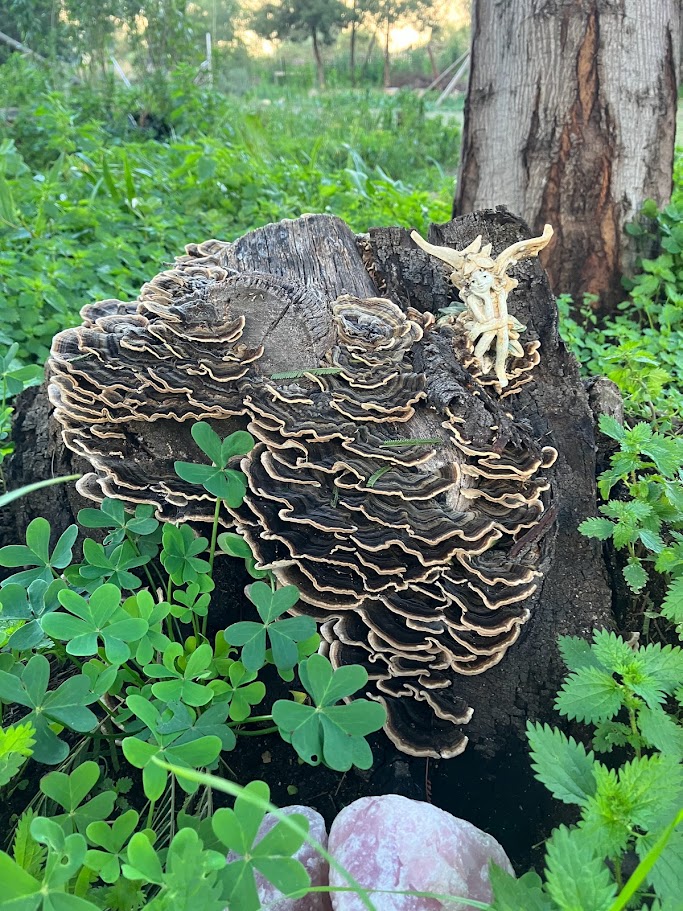
Nature then does the rest.
Every now and then mushrooms appear above the soil to remind us that something important is happening beneath the surface.
The real work is invisible – the slow breakdown of wood, the recycling of nutrients, and the gradual building of living soil.
Here at Little Rock, fungi are quietly helping us regenerate the land, one small thread at a time.